

Massachusetts Supportive Housing Pipeline Coalition Statement Regarding Executive Order on Homelessness
MASSACHUSETTS — On July 24th, President Trump issued an Executive Order (“EO”) on homelessness that trades effective solutions for fear-based politics. Casting the unhoused as “public safety threats,” the EO sidelines proven Housing First strategies in favor of punitive measures, like homeless sweeps and prosecution, that displace rather than house. This kind of crackdown will only serve to create more barriers to housing, not fewer.
The Massachusetts Supportive Housing Pipeline Coalition (the “Coalition”) believes that everyone in Massachusetts deserves access to a safe and affordable home in the community of their choice. That is especially true for our neighbors experiencing homelessness who have the most to gain from stable, long-term housing. Overwhelming evidence shows that supportive housing is the most effective way to help this population. Supportive housing combines the Housing First strategy—which prioritizes fast, affordable, and permanent housing placement for those experiencing homelessness—with ongoing, person-centered services to increase well-being and improve housing stability.
Rising housing costs across the country continue to make affordable housing out of reach for millions and have contributed to record-high homelessness. To combat these issues, elected officials should be championing evidence-based solutions like supportive housing. Instead, the EO does the opposite and undermines state-level Housing First programs by directing the Executive Branch to “end[] support for ‘housing first’ policies.”
This directive could have disastrous consequences in Massachusetts. Not only is the Commonwealth already grappling with an affordable housing shortage, but recent social safety net cuts and changes to Medicaid and SNAP will soon inflict serious financial harm on the poorest Bay Staters. Under these conditions, any reduction in federal funding for supportive housing will hinder our best homelessness interventions, exacerbating and prolonging housing instability for countless Massachusetts individuals and families.
Contrary to the EO’s messaging, the unhoused are both less likely than housed people to commit violent crime, and more likely to be the victims of violence than to perpetrate it. And while many within the unhoused population struggle with drug use and mental health, research reveals that a third live with a serious mental illness and that 20-35% suffer from substance abuse issues. Far from overwhelming numbers.
False narratives about homeless people incite fear and dehumanization. And yet the EO relies on those narratives to justify its support for harsh and punitive tactics. Among its other directives, the EO instructs federal agencies to:
Prioritize federal funding for jurisdictions that “enforce prohibitions” on things like “urban camping and loitering;” and
Maximize involuntary civil commitment as a response to homelessness.
Encampment sweeps and other policies that criminalize survival activities may temporarily remove homeless people from sight, but they negatively impact health outcomes and can exacerbate homelessness in the long term. Involuntary commitments suffer from similar drawbacks. Jurisdictions that have studied forced hospitalization have found that it often fails the first time. And mental health professionals have explained that the practice is liable to cause serious trauma and do more harm than good, while providing no guarantee of housing, treatment, or recovery support services after discharge.
Even more fundamentally, these interventions do nothing to mitigate the primary structural driver of homelessness: a widespread lack of affordable housing.
The Coalition, which represents over 80 diverse organizations working in housing production, healthcare, and homelessness, has built a strong network of Commonwealth leaders and stakeholders committed to advancing the housing solutions we know work. Together, our impactful advocacy has already helped create new tools like the Supportive Housing Pool Fund, as well as three state commissions focused on affordable housing. The Coalition is committed to fostering a Massachusetts where homelessness is rare, brief, and one-time. And it will push back against any policy that impedes that goal, including the EO.
To make progress on homelessness, we must reject fear-based narratives and focus on strategies grounded in data and human dignity. That means restoring federal support for the Housing First approach and ending punitive policies that inflict damage without lasting results. There is still time to reverse the course charted in this EO, and the Coalition implores federal officials to do so immediately. Now is the time to focus on the future we want to see for Massachusetts—one where everyone has the support they need to thrive.
Citizens’ Housing and Planning Association (CHAPA)
Massachusetts Association for Mental Health (MAMH)
Massachusetts Housing and Shelter Alliance (MHSA)
United Way of Massachusetts Bay
Western Massachusetts Network to End Homelessness
###
The Massachusetts Supportive Housing Pipeline Coalition is a diverse coalition of more than 80 nonprofit and for-profit developers, healthcare companies, service providers, policy organizations, and advocates working to scale supportive housing options and ensure those with the most to gain from a home have what they need to heal and thrive. To learn more, please visit masupportivehousingcoalition.org.

Addressing the Human and Economic Costs of Homelessness
More than a hundred leaders in the movement to end and prevent homelessness gathered to celebrate two major statewide housing policy wins and plan for the year ahead with the Massachusetts Supportive Housing Pipeline Coalition, hosted at the Federal Reserve of Boston.
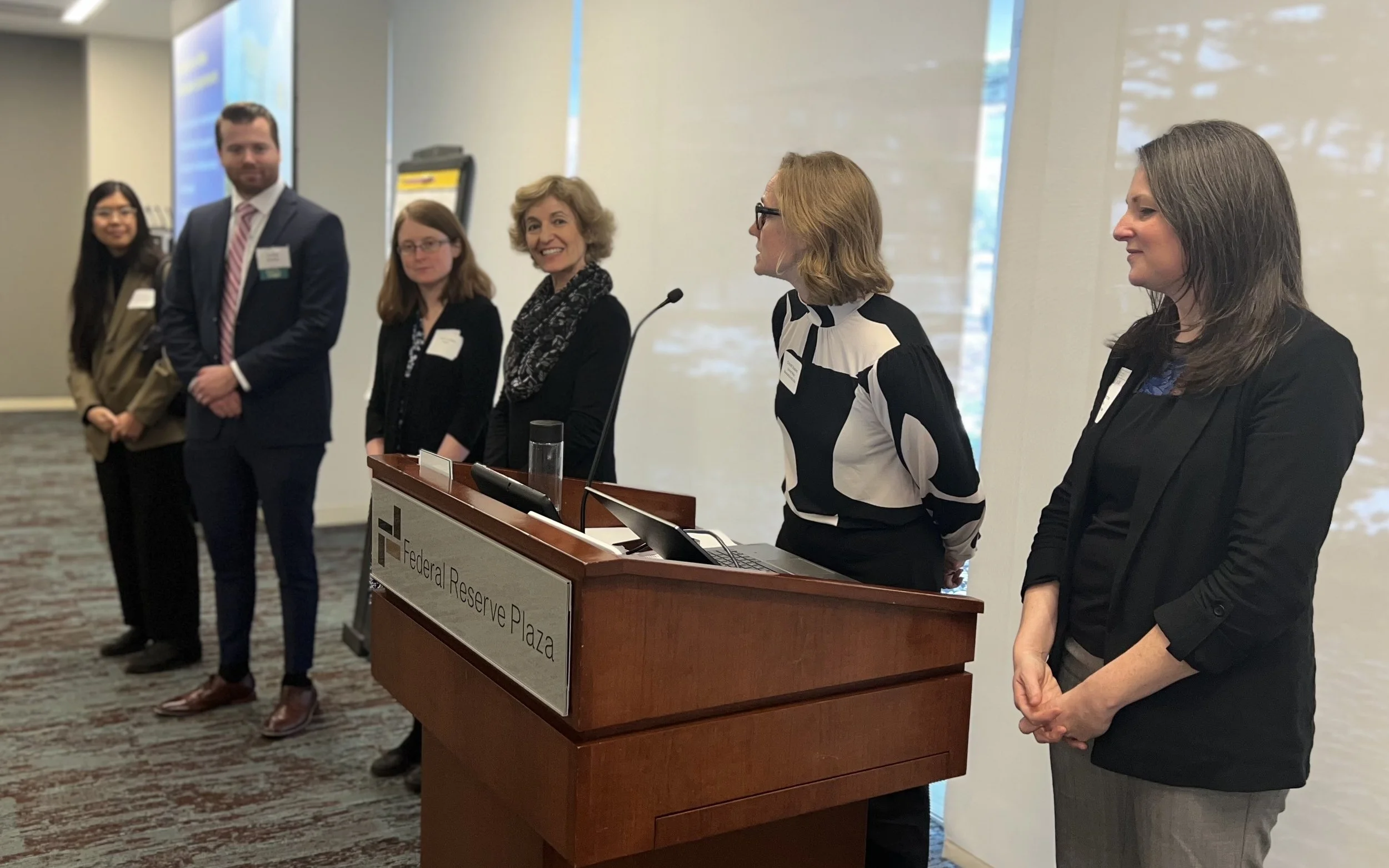
Supportive Housing Pipeline Coalition celebrates statewide housing policy wins
More than a hundred leaders in the movement to end and prevent homelessness gathered to celebrate two major statewide housing policy wins and plan for the year ahead with the Massachusetts Supportive Housing Pipeline Coalition, hosted at the Federal Reserve of Boston.
Last summer, Massachusetts passed the landmark $5.1B Affordable Homes Act, paving the way to create more than 200,000 affordable and supportive housing units needed to address the housing shortage and emergency shelter crisis in the Commonwealth. Last month, the Healey-Driscoll Administration released “A Home for Everyone,” its first comprehensive housing plan for Massachusetts.
The Massachusetts Supportive Housing Coalition of more than 80 housing developers, healthcare leaders, service providers, and advocates focuses on building a shared agenda to create 10,000 units of supportive housing needed to address chronic and high need homelessness in the Commonwealth. The Coalition is led by Citizens Housing and Planning Association (CHAPA), Massachusetts Housing and Shelter Alliance (MHSA), and United Way of Massachusetts Bay, the Massachusetts Association for Mental Health, and the Western Massachusetts Network to End Homelessness.
Supportive housing is a housing first strategy and solution to chronic homelessness. Gaining momentum among policymakers and funders, supportive housing pairs deeply affordable, permanent housing with case management and services. It is proven to reduce emergency and acute healthcare costs, improve health outcomes, and allow people to exit hospitals, child welfare, and shelter, so that state and philanthropic funding can shift investments toward permanent solutions.
“There are really a different set of tools you need to build supportive housing,” said Lyndia Downie, Executive Director of Pine Street Inn. “Until United Way put together this coalition, I think a lot of us felt like we just weren’t getting any traction.”
“It is a huge accomplishment that the state housing plan calls for 10,000 units in the next ten years,” said Joyce Tavon, Executive Director, MHSA. “And in all the other forums of affordable housing we’re finally talking about supportive housing and the Supportive Housing Pool Fund that was included in the Affordable Homes Act. These are just huge steps forward.”
At the February luncheon, Coalition leaders previewed the Coalition policy agenda for the year, which includes advocating for legislative, budget, and administrative changes that will allow Massachusetts to expand SH capacity and reduce chronic homelessness. The Coalition is supporting bills H1522 and S991, to create an interagency supportive housing strategy and finance board that will bolster the infrastructure required to implement the Supportive Housing Pool Fund.
“Having access to good data, having stories helping to inform the way we think about homelessness and how we think about the needs of people trying to exit homelessness is incredibly useful to us in state government,” said Gordon Calkins, Director of Individual Homelessness at the Executive Office of Housing and Livable Communities.
This year, the Supportive Housing Coalition will focus on advocating for statewide implementation of the Supportive Housing Pool Fund, included in the Affordable Homes Act passed last year. When implemented, the Fund will allow for combined public and private investment to increase the production of supportive housing. This in turn will allow individuals, youth, and families to stabilize, heal, and thrive, and create a safety net that makes communities more resilient in times of crisis.
“Creating supportive housing and housing for people who have experienced homelessness doesn’t just happen,” says Sarah Bartley, Senior Vice President, Safe & Stable Housing at United Way of Massachusetts Bay. We must be strategic and unlock it at every point in the pipeline. What I think the coalition does well is to amplify the message that change requires lots of actions and we need to align all those actions if we really want the change.”
Read the Supportive Housing Coalition’s statement on the Healey-Driscoll's statewide comprehensive housing production plan here.
To learn more about the Supportive Housing Pipeline Coalition go to https://www.masupportivehousingcoalition.org/
About the Supportive Housing Pipeline Coalition
The Supportive Housing Pipeline Coalition is a group of more than 80 nonprofit and for-profit developers, healthcare companies, service providers, policy organizations and advocates working to scale supportive housing options and ensure those with the most to gain from a home have what they need to heal and thrive.
Led by United Way of Massachusetts Bay, Citizens Housing and Planning Association, Western Massachusetts Network to End Homelessness, Massachusetts Association for Mental Health and the Massachusetts Housing and Shelter Alliance we are uniting Massachusetts' housing and service ecosystems and harnessing the power of working together to end homelessness.