

Addressing the Human and Economic Costs of Homelessness
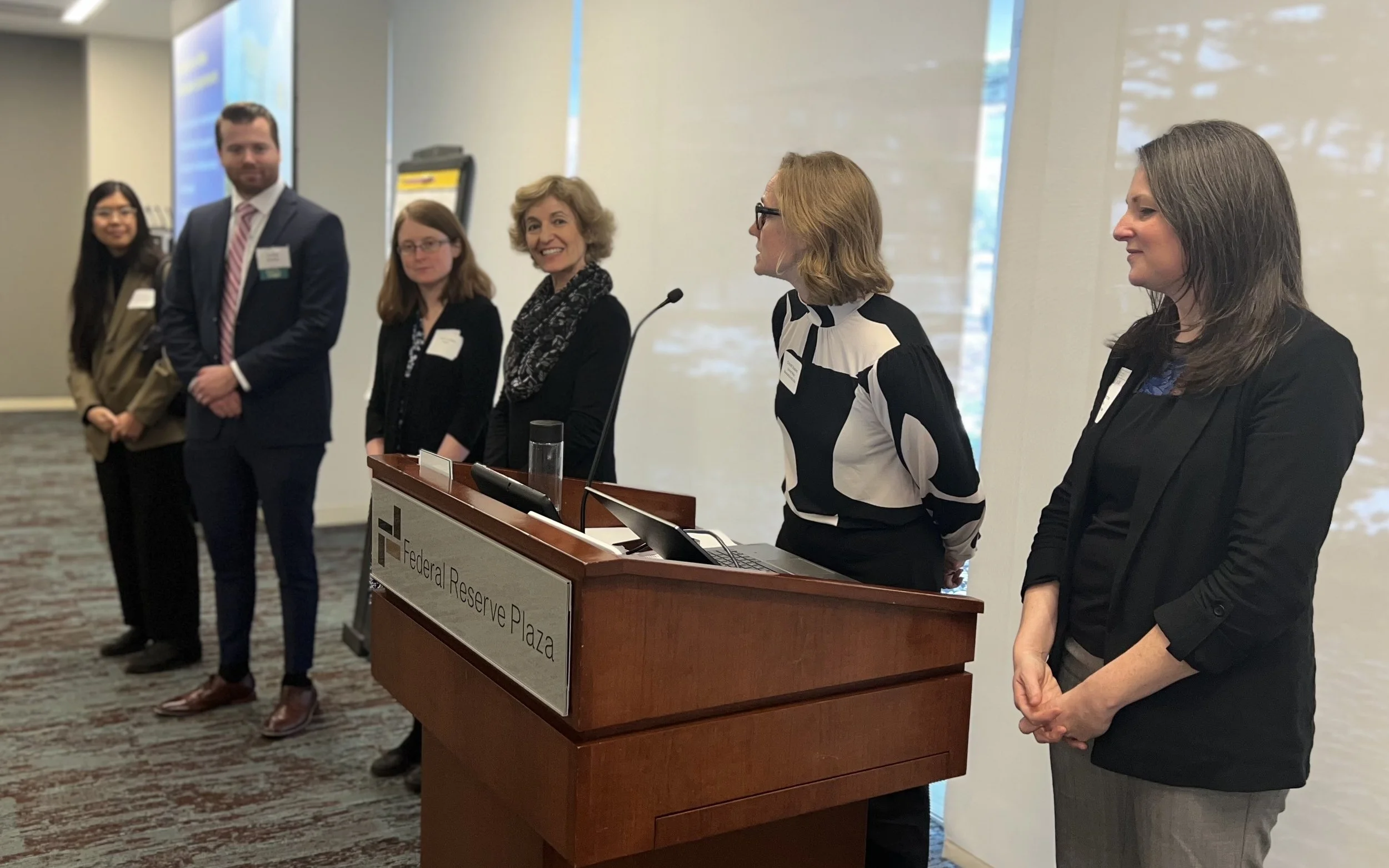
Supportive Housing Pipeline Coalition celebrates statewide housing policy wins
More than a hundred leaders in the movement to end and prevent homelessness gathered to celebrate two major statewide housing policy wins and plan for the year ahead with the Massachusetts Supportive Housing Pipeline Coalition, hosted at the Federal Reserve of Boston.
Last summer, Massachusetts passed the landmark $5.1B Affordable Homes Act, paving the way to create more than 200,000 affordable and supportive housing units needed to address the housing shortage and emergency shelter crisis in the Commonwealth. Last month, the Healey-Driscoll Administration released “A Home for Everyone,” its first comprehensive housing plan for Massachusetts.
The Massachusetts Supportive Housing Coalition of more than 80 housing developers, healthcare leaders, service providers, and advocates focuses on building a shared agenda to create 10,000 units of supportive housing needed to address chronic and high need homelessness in the Commonwealth. The Coalition is led by Citizens Housing and Planning Association (CHAPA), Massachusetts Housing and Shelter Alliance (MHSA), and United Way of Massachusetts Bay, the Massachusetts Association for Mental Health, and the Western Massachusetts Network to End Homelessness.
Supportive housing is a housing first strategy and solution to chronic homelessness. Gaining momentum among policymakers and funders, supportive housing pairs deeply affordable, permanent housing with case management and services. It is proven to reduce emergency and acute healthcare costs, improve health outcomes, and allow people to exit hospitals, child welfare, and shelter, so that state and philanthropic funding can shift investments toward permanent solutions.
“There are really a different set of tools you need to build supportive housing,” said Lyndia Downie, Executive Director of Pine Street Inn. “Until United Way put together this coalition, I think a lot of us felt like we just weren’t getting any traction.”
“It is a huge accomplishment that the state housing plan calls for 10,000 units in the next ten years,” said Joyce Tavon, Executive Director, MHSA. “And in all the other forums of affordable housing we’re finally talking about supportive housing and the Supportive Housing Pool Fund that was included in the Affordable Homes Act. These are just huge steps forward.”
At the February luncheon, Coalition leaders previewed the Coalition policy agenda for the year, which includes advocating for legislative, budget, and administrative changes that will allow Massachusetts to expand SH capacity and reduce chronic homelessness. The Coalition is supporting bills H1522 and S991, to create an interagency supportive housing strategy and finance board that will bolster the infrastructure required to implement the Supportive Housing Pool Fund.
“Having access to good data, having stories helping to inform the way we think about homelessness and how we think about the needs of people trying to exit homelessness is incredibly useful to us in state government,” said Gordon Calkins, Director of Individual Homelessness at the Executive Office of Housing and Livable Communities.
This year, the Supportive Housing Coalition will focus on advocating for statewide implementation of the Supportive Housing Pool Fund, included in the Affordable Homes Act passed last year. When implemented, the Fund will allow for combined public and private investment to increase the production of supportive housing. This in turn will allow individuals, youth, and families to stabilize, heal, and thrive, and create a safety net that makes communities more resilient in times of crisis.
“Creating supportive housing and housing for people who have experienced homelessness doesn’t just happen,” says Sarah Bartley, Senior Vice President, Safe & Stable Housing at United Way of Massachusetts Bay. We must be strategic and unlock it at every point in the pipeline. What I think the coalition does well is to amplify the message that change requires lots of actions and we need to align all those actions if we really want the change.”
Read the Supportive Housing Coalition’s statement on the Healey-Driscoll's statewide comprehensive housing production plan here.
To learn more about the Supportive Housing Pipeline Coalition go to https://www.masupportivehousingcoalition.org/
About the Supportive Housing Pipeline Coalition
The Supportive Housing Pipeline Coalition is a group of more than 80 nonprofit and for-profit developers, healthcare companies, service providers, policy organizations and advocates working to scale supportive housing options and ensure those with the most to gain from a home have what they need to heal and thrive.
Led by United Way of Massachusetts Bay, Citizens Housing and Planning Association, Western Massachusetts Network to End Homelessness, Massachusetts Association for Mental Health and the Massachusetts Housing and Shelter Alliance we are uniting Massachusetts' housing and service ecosystems and harnessing the power of working together to end homelessness.